|
Getting your Trinity Audio player ready...
|
Purchase Price: The Core Investment
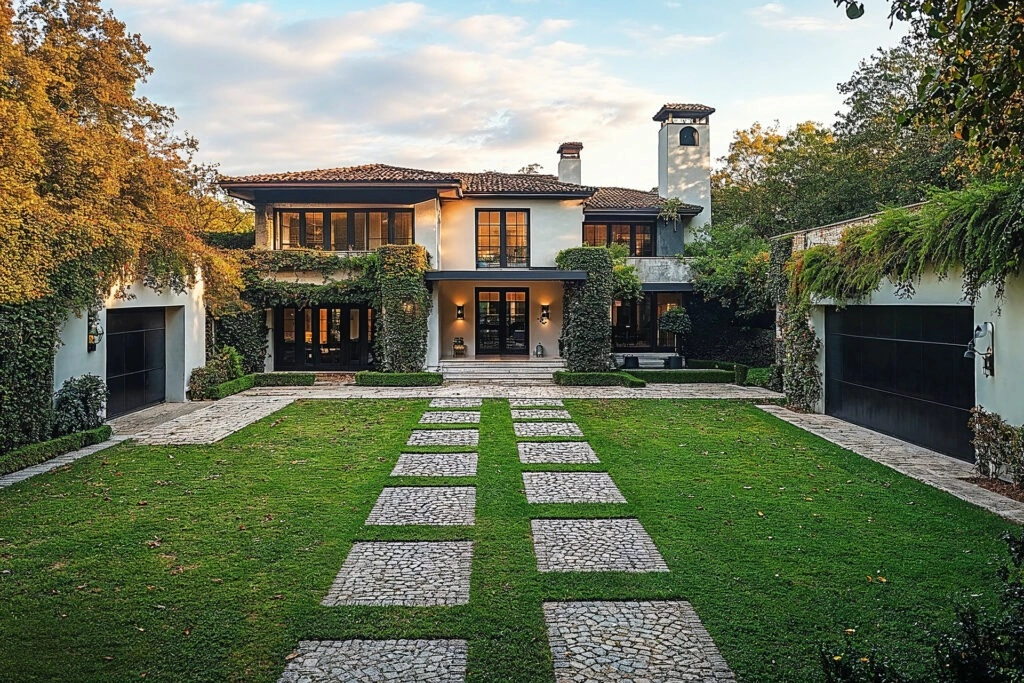
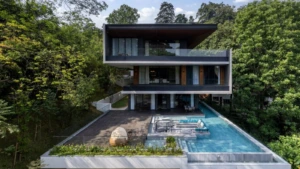
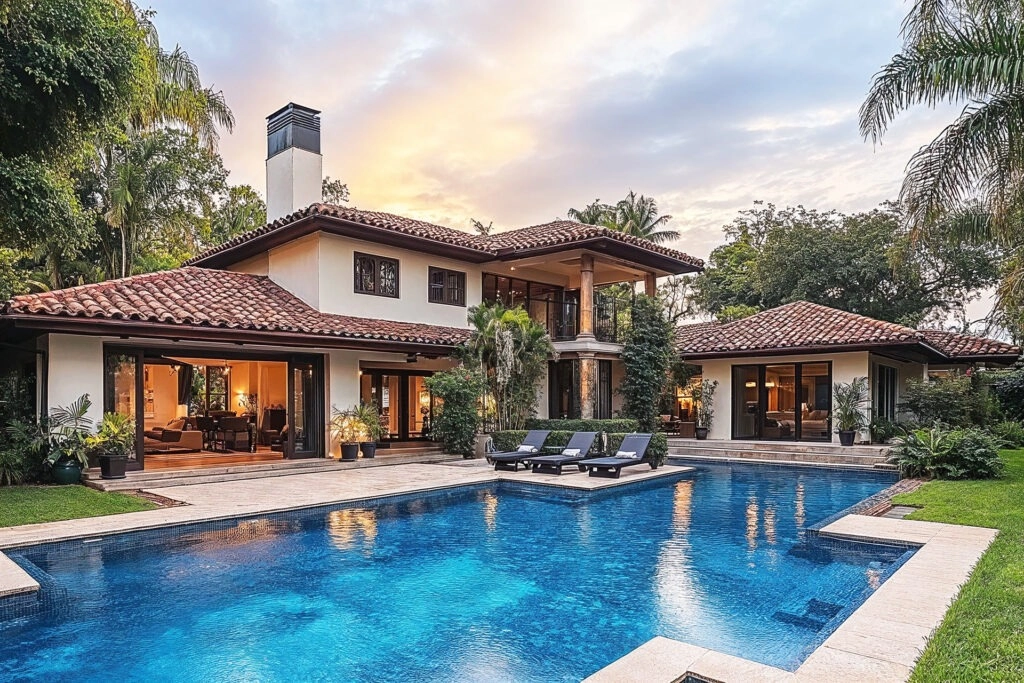
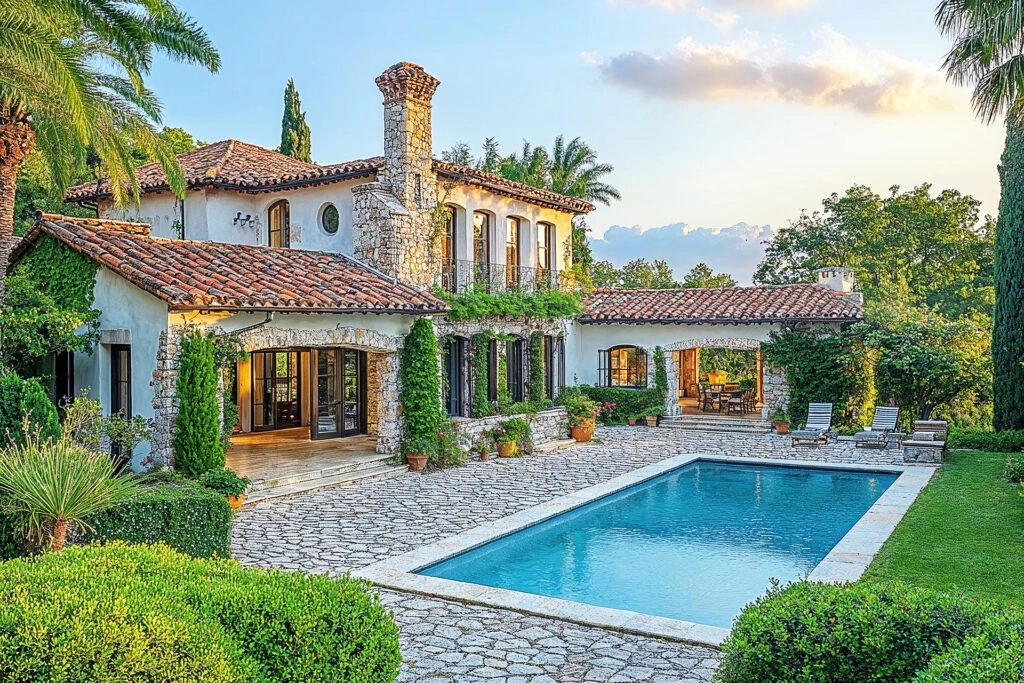
Approximately 5% of Singapore residential properties are classified as landed. This rarity drives prices to be much greater than that of an average apartment.
Market Data as of 2024–2025 represents the cost of landed property Singapore:
- A Terrace house usually sells for between S$1.8 million and S$6.8 million.
- A semi-detached house sells for between S$3.2 million to S$13.3 million.
- A Detached house or Bungalow can sell for S$3.8 million – S$22.5 million.
Good Class Bungalows (GCB) are the most coveted type. The starting price for GCBs would typically be from S$10 million, going all the way to approximately S$110 million, depending on the location of the land, size of the plot and quality of the architectural heritage.
Freehold titles of landed properties also attract higher premiums. Areas where Freehold titles exist in Singapore’s Prime Districts (Districts 10, 11 and 21) have continued to show an upward trend in prices due to easy demand and limited supply.
Buyer’s Stamp Duty (BSD)
Buyer’s Stamp Duty applies to all property purchases and must be paid upfront. Since February 2023, Singapore has adopted a progressive, tiered BSD system:
- 1% on first S$180,000
- 2% on next S$180,000
- 3% on next S$640,000
- 4% on next S$500,000
- 5% on next S$1.5 million
- 6% on any value exceeding S$3 million
For a S$5 million landed home, BSD alone can amount to well over S$200,000.
Additional Buyer’s Stamp Duty (ABSD)
The additional buyer’s stamp duty (ABSD) represents a large and variable cost based on an individual’s residence status.
Rates for ABSD effective 2024–2025:- Foreign Nationals (any country): 60%
- Singapore Permanent Residents purchasing 2nd or later homes: between 20% and 30%
- Singapore Citizens purchasing their second home: 20%; third and later homes: 30%
- Corporate and other entities: 65%
- Foreign Nationals purchasing completed landed properties, which must first obtain special permissions, are imposed with the highest ABSD in the world, causing enormous entry costs for these properties.
A foreign buyer purchasing a S$10M home would therefore pay S$6M in ABSD.
Legal, Valuation & Administrative Expenses
In addition to the purchase price and stamp duty, there are other fees associated with the transaction.
- Legal Fees:
Normal conveyancing fees for high-value residential transactions usually range from S$2,500 to S$5,000. Fees can increase greatly with complex ownership structures and/or trusts. - Valuation Fees:
Banks require a qualified valuation before making loans. Where lent to purchase, the valuation on a Singapore landed homes price commonly ranges from S$500 to S$1,000 depending upon its scope as property. - Bank & Financing:
As private residential properties, Singapore luxury landed homes are subject to the Monetary Authority of Singapore’s (MAS) limits concerning loan-to-value (LTV). Buyers who do not have outstanding mortgages may borrow up to a maximum of 75% LTV, which would be reduced for buyers who already own their current properties. A minimal fee is charged by banks for processing applications; however, these amounts will typically represent a small percentage of the purchase price.
The Cost of Renovating and Rebuilding Homes
Most buyers investing in the renovation market (particularly developers) will spend quite a bit on renovating older freehold houses.
The following are general renovation costs:
Minor renovations range from S$100K to S$300K
Full-Home Renovation Costs range from S$400K to S$1M
If a developer is reconstructing or building a new structure on the land where an older home was located, a new building can cost between S$1M and S$3M+ (depending on the level of customization, quality materials used and whether a basement or additional storeys will be added to the property).
Newer-style GCB homes (with modern design and style) can reach a reconstruction cost of more than S$5M.
Annual Tax on Property
Singapore landed property taxes are determined based on the property owner’s AV, which represents the amount of rental income the property may generate. During the tax years 2024 to 2025, owner-occupied properties are taxed according to the AV with tiered progressive tax rates (i.e., based on AV) which range from 0% to 32%. Taxes for non-owner-occupied properties are imposed at the progressive rates of 12% through 36%. There are many landowners whose land is located in prime districts who may have higher AVs due to the size of their land or the prime location of their land.
For example, a residential property Singapore with an AV of S$60,000 may incur a property tax of between S$7,000 to S$10,000 as an annual tax, depending on whether the property is owner-occupied or not.
Costs for Maintenance and Upkeep
While condo owners pay monthly upkeep fees, those who own landed homes will likely incur greater overall monthly expenses because they are responsible for all aspects of property upkeep.
Here are some typical annual costs for upkeep:- Landscaping & Gardening: S$3,000.00 to S$12,000.00
- Pool Maintenance (if any): S$1,200.00 to S$3,000.00
- Repairs & Services in General: S$5,000.00 to S$20,000.00
- Pest Control: S$600.00 to S$1,500.00
- Structural Maintenance for Older Homes: Can range upwards from S$20,000.00 to S$40,000.00 per year
- High-end homes with large land plots will often allocate 1-2% of the total value of the property each year to the cost of maintenance.
Homeowners Insurance
It is highly recommended that all high-value properties in real estate Singapore have comprehensive home insurance to cover the structure of the home as well as fire-related damage.
Premiums for a high-value property can range anywhere from S$500.00 to S$3,000.00 per year, depending upon the level of coverage, size, and age of the building. For high-end/expensive homes, custom high-limit insurance plans can cost in excess of S$5,000.00 to S$10,000.00 per year.
Liquidity and Opportunity Cost
Owning landed property in Singapore provides long-term capital appreciation, however the liquidity is very limited.
- Buyer pools are very small.
- Foreign ownership of landed properties has many restrictions.
- GCB locations typically see very few transactions each year.
For HNWIs with a diversified global portfolio, this lack of liquidity is a key strategic consideration.
Conclusion
To own a landed property in the Singapore housing market constitutes an elite privilege in Singapore, something that only a select group has access to. The costs are much higher than the purchase price: there are stamp duties, legal costs, financing charges, renovation expenses, maintenance and taxes that significantly increase the outlay. But for many rich people, these costs are outweighed by what landed homes can uniquely provide: the privacy, legacy prospects, freedom of architectural adaptation, stability of capital and the irreplaceable value that land in one of the world’s most secure and future-ready economies provides.